Pages

Showing posts with label Summer learning Journey. Show all posts

Thursday, 28 December 2017

SLJ - WK2 Day 2 Activity 1,2 & 3

SLJ - Activity 1: Popular culture - The Silent Movie

The 1920s saw a massive surge in the number of people going to the movies. Huge new cinemas were built in both Auckland (The Civic Theatre) and Dunedin (Empire De Luxe).  The most popular type of movies showing at local NZ cinemas were ‘silent’ films. Gold Rush is an example of an iconic silent film. It features a famous actor named Charlie Chaplin.

Watch the trailer for Gold Rush. On your blog, tell us what you think the movie is about. There are no words spoken movie so you will need to pay careful attention to what the actors are doing! Do you think you would enjoy watching a silent film? Why/Why not?

I decided to watch The Lion's Cage. I definitely enjoyed this. Although it was silent and had no words I think that is was very very funny. Would I watch a WHOLE movie? maybe not because I guarantee you I will get bored. Maybe it can be a challenge
Image result for silent movie

SLJ - Activity 2:Art Deco

In the 1920s a new artistic movement emerged in New Zealand (and around the world). It was called ‘Art Deco.’ The picture to the right is a classic example of an ‘Art Deco’ piece. Take a close look at the painting. Do you like it?

On your blog, give the painting a rating out of 5 stars (1 star = terrible painting, 2 stars = pretty bad painting, 3 stars = okay painting, 4 stars = good painting and 5 stars = amazing painting). After you’ve rated the painting out of 5, tell us why you gave it that rating.

Right: Self Portrait By Tamara de Lempicka

I rate this painting 4 stars because I love how realistic it is. Although it is very pretty I don't see much in it. When I look at photos I like to see what is behind it or what's the meaning of it. I just can't see it. What do you think?


SLJ Activity 3: Crossing the Tasman 

In 1928, a crew of four men flew, for the first time, across the Tasman from Australia to New Zealand. One of the men on board the Southern Cross airplane was a New Zealander named T.H. McWilliams. His job was to operate the radio in the airplane. Unfortunately, the radio stopped working shortly after take-off and the rain and ice were so heavy that the pilot, Kingsford Smith, couldn’t see out of his front windscreen. Yikes! Fortunately, the plane made it all the way across the Tasman landing in Christchurch after a 14 hour trip.

Imagine that you were a member of the flight crew. Write a poem that describes how you would have felt when you landed safely in Christchurch after such a long trip. Remember, there are lots of different types of poems, and they don’t all have to rhyme. You can read more about different types of poems by clicking here.

Sia
Oh Sia,
Why are you so Scared?
Why are you so Frightened?
Are you afraid of landing?

I did a Question poem.

Wednesday, 27 December 2017

SLJ WK 1 Day 5 Activity 1, 2 & 3

SLJ - Activity 1: Translating phrases

Unlike the Māori, many of the European settlers didn’t speak Te Reo Māori. Instead, they spoke English. As you can imagine, it was very difficult for the two groups to communicate because they did not have a dictionary or a translator. These days we are able to use the Internet to translate words and phrases from one language to another.

Use Google Translate to translate the following five phrases from English to Te Reo Māori or from Te Reo Māori to English. Post the translations on your blog. Be sure to include the phrase in both the English and Māori to earn full points.

Phrases:

  1. Nau mai ki Aotearoa.
  2. ____ is my name.
  3. What is your name?
  4. He pai taku ki te takaro i te whutupaoro.
  5. Where do you come from?

Maori English
Nau mai ki Aotearoa Welcome to New Zealand

Ko Telesia toku ingoa Telesia is my name

He aha to ingoa What is your name?

He pai taku ki te takaro i te whutupaoro I like to play football or rugby

No hea koe Where do you come from?


 SLJ - Activity 2: The treaty of waitangi

On 6 February 1840, a very special document was signed by the Māori chiefs and the British settlers in New Zealand. It was called the Treaty of Waitangi (Te Tiriti o Waitangi) and it outlined how the two groups would live together and work together in New Zealand. It was the first document of its kind to be signed in the entire world. The Treaty was signed in a place called Waitangi in northern New Zealand.

Follow this Waitangi village link to read about the village of Waitangi.

On your blog, tell us three fun things that you can do as a visitor in Waitangi. Which one would you like to do the most?


1. Waitangi Mountain Bike Park

This is a dangerous but very fun activity where you can ride around on a Mountain Bike, and see the beautiful landscapes of New Zealand.
Waitangi Mountain Bike Park

2. Waitangi Treaty Grounds Hāngi and Concert

You'll get to go on a short bush walk to be welcomed with a Powhiri before entering the Marae to see a performance. You'll also get to eat a Hangi. Yum!

Powhiri (traditional welcome)


3.  Have fun

I would just roam around the huge are and take photos have a picnic and have fun


I would love to try out No.2 which is the Hangi and Concert.
 I love that there will be food and its sound really really fun


 SLJ - Activity 3: #EarnTheFern


After the Treaty of Waitangi was signed, New Zealand became a British colony. Many other countries in the world are also British colonies including Canada, South Africa, Australia, India and Malaysia. As a group they were, and still are, called the ‘Commonwealth’ countries. Years ago, a man named Melville Marks Robinson was asked to organize a sporting competition for people living in the Commonwealth countries. It is called the Commonwealth Games. The first ever event took place in Hamilton, Canada in 1930.


Athletes from New Zealand have competed in the Commonwealth Games for years. In the most recent Commonwealth Games event in Glasgow, Scotland New Zealand athletes won a total of 45 medals. The next Commonwealth Games will be held in 2018 in the Gold Coast, Australia. Hundreds of athletes are competing for the chance to represent NZ at the games (to 'Earn the Fern').

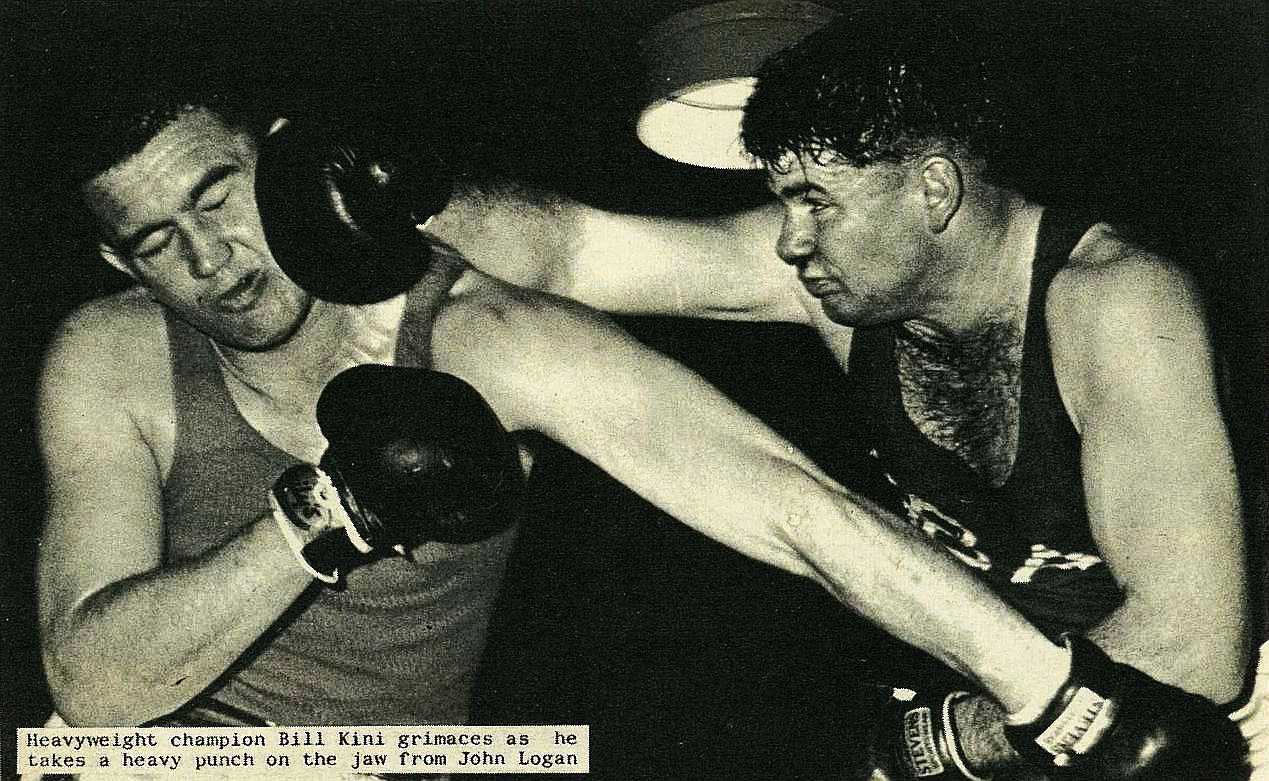
One of New Zealand’s gold-medal-winning Commonwealth athletes was a man named Bill Kini. Bill won a gold medal at the 1966 Commonwealth Games for being the best heavyweight boxer. He was a man of many talents! He played rugby in Ōtāhuhu in the 1960s and later moved to Whangarei.

Imagine that you could interview Bill. What would you ask him about his time at the 1966 Commonwealth Games. What would you want to know? I’d like to know how he had time to train for two sports at once.

On your blog, write four questions that you would ask Bill Kini.

No.1: What got you into these different kinds of sports?

No.2: Did you have any influences?

No.3: How many hours did you train a day?

No.4: How did you feel when you won the Gold Medal?
Image result for Bill kini

SLJ WK 1 Day 4 Activity 1,2 & 3

SLJ - Activity 1: The waiata - A song in your heart

In the past, Māori would often use song as a way of sharing information or communicating emotions.  A waiata is the name given to a traditional Māori song. One of my all-time favourite waiata is Kia Paimarie. What about you?

Use Google to research traditional Māori Waiata. Listen to a number of Waiata and read the lyrics. On your blog tell us which one of the waiata you found you like the most. Why do you like it?


I like Tiaho Mai Ra because the lyrics are really beautiful.
Have a look for yourself, don't you agree?

Tiaho mai rā
Te whetu o te ata
Kopu i te ao,
Pareārau i te pō
Ka tu te ao marama
he ao hara
Tu mai rā koe hei tohu i ahau,
E kore te aroha,
E kaupare noa
Hoki mai rā ki ahau, e te tau.

Tiaho mai rā
Te whetu o te ata
Kopu i te ao,
Pareārau i te pō
Ka tu he o marama
he ahara
Tu mai rā koe hei tohu i ahau,
Tu mai rā koe hei tohu i ahau
Shining over there
Is the morning star
Venus in the dawn,
Saturn in the night
The full moon is rising
Above a sinful world
You rise up there as a sign to me
You rise up there as a sign to me...

...that love does not
Randomly turn away.
Come back to me my darling

Shining over there
Is the morning star
Venus in the dawn,
Saturn in the night
The full moon is rising a
Above a sinful world
You rise up there as a sign to me
You rise up there as a sign to me.  


SLJ - Activity 2: Playing games

Hundreds of years ago, young Māori children were taught to play a number of games, including Poi Rakau, Ki O Rahi, Koruru Taonga and Poi Toa. Read about each of these four games on the Rangatahi tu Rangatira website. Have you played any of them before? Isn’t it cool how the games have been passed down for generations?

Choose one game, and on your blog, tell us the (i) name of the game, (ii) the goal or purpose of the game, and (iii) two rules.


You could try playing some of the games with a friend.

Name of game: Poi rakau

Purpose of game: Catch the Stick

Rules: You cannot dig the stick/raku into the ground and you cannot purposely throw the stick away

SLJ - Activty 3: Musical festivals - Matatini

In New Zealand, a huge festival is held every two years, called Te Matatini. This performing arts festival celebrates the tikanga (culture or customs) of Māori. Kapa Haka groups from around New Zealand are invited to attend the festival and each group gives a 25-minute performance. The performances are judged and the best teams win prizes.

The gold medal winning team from this year (2017) was Te Kapa Haka o Whāngārā Mai Tawhiti.

Watch these three clips from previous Te Matatini festivals.

Te Iti Kahurangi

Te Puku o Te Ika


On your blog, rank the performances from your favourite (#1) to least favourite (#3) and tell us why you gave them the ranking that you did.

1st: Tamatea Arikinui

I loved this one because the skills that they had with the poi's were amazing.Their voices were like angels.

2nd: Te iti kahurangi

I put Te iti in 2nd place because I liked their outfits.They sang beautifully along with their swaying.

3rd: Te puku o Te ika

I found this one very sad and depressing, which I didn't really like. So that is why I put it in 3rd place. But they did do an amazing job